Fairway
Role: UX Designer
Objective: Re-imagine existing golf tracking platforms by converting raw performance data into actionable coaching insights in under three taps.
Tools: Figma
Methods: Informal interviews, Competitive analysis, Usability testing

The Problem & The User's Need
-
The System Problem: Existing golf apps are dead ends. They collect scores and shot stats, but leave players to figure out on their own how to fix their mistakes.
-
How Golfers Think: Most players don't think in complicated stats; they think in real outcomes (e.g., "I keep missing the green to the right").
-
The System Need: A system that takes in shot data, figures out what's going wrong, and immediately tells the player how to fix it.
-
Design Direction: Turn a passive stat tracker into an active AI Caddie that guides player improvement.
How the System Works
-
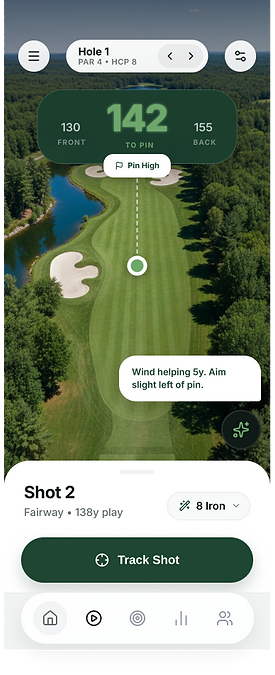
Gathering Data: Quick input screens make it easy to log shots during a round without distracting from play.
-
Finding Patterns: The app looks at rounds over time to spot repeating mistakes rather than one-off bad shots.
-
The AI Caddie: Automatically translates complex stats into plain-English coaching tips and matches weaknesses directly to relevant practice drills.


User Journey From Round to Range
-
Step 1 (Spotting the Problem): The system cuts through the noise and highlights the single biggest issue hurting the player's score.
-
Step 2 (AI Caddie Feedback): Converts numbers into clear advice (e.g., "Your shots from 125–150 yards are costing you 2 strokes per round").
-
Step 3 (Practice Plan): Recommends specific driving range or putting drills to fix that exact issue.
-
The Result: Golfers show up to practice with a clear goal instead of aimlessly hitting balls.


System Impact & Takeaways
-
Speed & Simplicity: Built the workflow so players can get from AI Caddie insights to drills fast without getting lost in menus.
-
Smart Trade-Offs: Focused on simple, automated caddie advice instead of overwhelming users with endless charts and complex options.
-
Changing Habits: Shifted the app experience from casually checking numbers after a round to taking meaningful action at the practice range.
-
Final Outcome: Created a complete, user-friendly system that turns golf stats into actual game improvement through an integrated AI Caddie.